
Overview
Healthcare is changing faster than almost any other sector. New systems, new models of care, new reforms, all designed to improve outcomes for patients and staff alike.
Good ideas don't implement themselves. You've probably seen it happen: a new system goes live before staff are ready, a reform stalls because no one owns delivery, a good idea stays a good idea because there's no one who can turn it into a plan.
The UNSW Online Master of Project Management (Healthcare) builds full end-to-end project management capability, then extends it with healthcare specialisation courses that add the depth to navigate ward-level realities, clinician buy-in and safety sign-off. You'll build on this foundation at program and portfolio level, so you're equipped to lead change across an entire healthcare system.
Why study with us?
The Master of Project Management (Healthcare) is a postgraduate project management program with formal specialisations in Healthcare and Leadership, delivered by Australia's #1 university** and endorsed by the Australian Institute of Project Management (AIPM).
Every course is informed by UNSW’s 50+ years of experience in health and project management research. You’ll build healthcare governance, service improvement and change management expertise to lead complex projects, then extend that capability to program and portfolio level, leading multiple projects and programs across a healthcare system at once.
You'll study one course at a time across six seven-week study blocks a year, so you can keep working while you build that capability.
^ True at the time of publishing
** QS World University Rankings, 2027
Duration
2 years, part-time
Courses
12
Intake
Jan, Mar, May, Jul, Aug, Oct
Program code
8876
The Master of Project Management (Healthcare) suits current project managers moving into healthcare, health professionals moving into project delivery, and policy or program professionals ready to lead complex healthcare transformation at a senior level.
If you're:
- already managing projects and want healthcare-specific expertise, this qualification builds the governance and service improvement skills employers are looking for.
- a clinician or health professional ready to move into formal project leadership, this qualification provides the structured project management foundation you need.
The Master of Project Management (Healthcare) builds full end-to-end project management capability, from healthcare governance and delivery through to service improvement, change management and advanced program and portfolio skills.
You’ll develop the knowledge and skills to design, implement and sustain projects across diverse healthcare settings, working with stake holders and other professionals to manage risk and address complex delivery challenges. You will build the judgement to navigate governance, legal, ethical, cultural, safety and quality requirements across an entire program of work.
Core courses
Complete each of the following core courses:
- Project Management Body of Knowledge
- Project Administration
- Project Risk Management
- The Business of Managing Projects
- Project Schedule and Budget Control
- Program and Portfolio Management, your final project (capstone)
Elective courses
Choose two of the following electives:
- Financial Management
- Analytics and Business
- Strategic Decision Making
- Commercial Contract Law
- Corporate Governance and Leadership
- Organisational Development
- Environmental Social Governance (ESG) for Projects
- Digital Transformation in AI
- Strategic Leadership
To find out more about each course and specialisation pathways, Download your program guide.
Healthcare project management demands governance, compliance and delivery skills that go beyond generalist practice. Our healthcare specialisation builds that depth, so you can navigate ward-level realities, clinician buy-in and safety sign-off with confidence.
Complete all four healthcare specialisation courses
- Healthcare Governance for Project Management
- Healthcare Project Implementation
- Health Service Improvement
- Project Change Management
If your interests lie elsewhere, you can also explore our leadership specialisation, which builds the capability to lead complex portfolios at scale, across any industry.
Whether you're moving into healthcare from another industry or advancing your project career within it, the Master of Project Management (Healthcare) prepares you for senior delivery and leadership roles across the health system, depending on your experience. Graduates pursue positions including:
- Transformation Lead
- Project Portfolio Manager
- Program Manager
- Change Manager
- Program Senior Executive
You can apply directly into the master’s program, or if you don’t meet the entry requirements, you can explore pathways from the Graduate Certificate in Healthcare Project Management, Graduate Certificate in Project Management or the Graduate Diploma in Project Management (Healthcare). The graduate certificate provides foundational project management skills, while the graduate diploma extends your learning and builds on that foundation. The master’s program offers the depth and breadth of knowledge to set you apart and prepare you for success in your career.
If you'd rather specialise in leadership, explore our leadership specialisation instead.
General admission requirements
To be eligible for this program, you must have:
- A completed Graduate Certificate in Project Management or Diploma in Project Management (Healthcare); OR
- A bachelor's degree or higher-level qualification in a related field*
*Related fields may include Management, Business, Commerce, Engineering, Information Technology, Construction Management, Architecture, Logistics and Supply Chain Management, Science, Social Sciences, Health Administration, Policy and Public Administration, Leadership and Organisational Development, Finance and Accounting, Environmental Studies, Security and Risk Management, Applied Healthcare, Health Management, medicine, nursing, allied health, health sciences, biomedical sciences, dentistry, social sciences, social work, psychology, paramedicine, environmental health, health administration, policy studies, development studies and other related fields.
Recognition of prior learning
You may be eligible to apply for Recognition of Prior Learning (RPL). Our friendly and knowledgeable advisors are ready to answer your questions and guide you through the process. Schedule a quick call to learn more.
English language
Depending on your educational background and citizenship, you may need to provide evidence of your English language proficiency to study at UNSW. We require a minimum level of English language competency for enrolment. English language skills are essential for webinar comprehension and the completion of coursework, assignments and examinations. If English is not your first language, you will need to provide proof of your English proficiency before receiving an offer to study at UNSW. You can do this by providing evidence that you meet one or more of the following criteria:
- English language tests and university English courses
- Prior study in the medium of English
- Other qualifications
- English waivers
Eligibility for admission does not guarantee offer of a place. Study plans and completion times may vary depending on elective choice, leave and subject availability. For more information, speak with a Student Advisor.
Program fees
At UNSW Online, we’re committed to providing a world-class education that delivers exceptional value. Our programs are designed to fit your lifestyle and career goals, with fees structured on a per-course basis to give you flexibility and control over your investment. Your student fees are calculated based on the courses you take and your residency type, ensuring transparency and fairness.
Indicative 2026 fee per course
$5,130
Indicative 2026 total program fees
$63,000
The total indicative fee varies based on the elective courses you select, the year you complete them and any approved recognition of prior learning (RPL) granted before you begin your studies. Find out more about our course and program fees here.
FEE-HELP available
Eligible domestic students can apply for FEE-HELP, a government loan to cover all or part of your tuition fees for fee-paying places. The loan amount is added to our HELP debt, which is repaid once your income reaches the repayment threshold.
You can apply for FEE-HELP as part of your acceptance to UNSW Online. The form will present itself during your final stages of online acceptance if you are eligible.
Applications must be submitted before the relevant teaching period census date. Read more about FEE-HELP and eligibility here.
At UNSW Online, we support you every step of the way as you work toward a qualification from one of the world's leading universities.
- Flexible by design – access course resources anytime, on any device and study around your life.
- One course at a time – study across six hexamesters a year, each a seven-week block with orientation time beforehand, so you can focus fully on one course before moving to the next.
- Same academic quality, online – learn from world-class academics and experience the same high-quality education as our on-campus students.
- Dedicated support – from enrolment to graduation, your dedicated Student Success Advisor is your go-to support for all non-academic questions.
- Career Success support – build your career plan with Career AI (powered by VMock), CaseCoach and guides for your LinkedIn profile, resume and cover letter.
Why choose the Master of Project Management (Healthcare) at UNSW Online?
Formal specialisations in project management
UNSW Online's postgraduate project management programs are built around formal specialisations, matching expertise to your industry.
AIPM-endorsed
The qualification is endorsed by the Australian Institute of Project Management (AIPM), recognising its alignment with professional project management standards.
Australia's #1 university*
UNSW is ranked 1st* in Australia and 19th globally - a proud reflection of excellence in research, teaching and positive societal impact.
*QS World University Rankings, 2027
Most employable graduates*
UNSW is recognised for producing the most employable graduates, winning the AFR Top100 Future Leader Awards seven years in a row**.
*AFR, Top 100 Future Leaders Awards 2020–2026
Why pursue a career in healthcare project management?
Health occupations already short-staffed
Australians will be aged 65+ by 2050, driving demand for care services
1 in 4
New jobs forecast in Australia's healthcare sector by 2035
541,900
Growth in demand for healthcare project management roles since 2020
34.7%
I've found the content at UNSW really practical, and the fact that the teachers have real-world experience makes it even more useful.
Brendan Vos
UNSW Online graduate
Frequently asked questions
Healthcare project management is the practice of planning, delivering and governing projects within health systems – from new patient pathways to digital referral platforms – while managing the clinical governance, safety and stakeholder complexity unique to healthcare settings.
It applies core project management principles like scope, risk and stakeholder management, then layers on health-specific requirements such as clinical governance, safety sign-off and evidence-informed practice.
Typical projects reshape how care is delivered. Common healthcare project management projects include:
- Digital referral and care coordination platforms
- Quality improvement initiatives
- New patient pathways
- Incident system rollouts
For example, rolling out a new electronic medical record system across a hospital network requires not just a project plan, but clinician buy-in, safety testing and compliance with health governance frameworks – exactly the kind of complexity healthcare project management addresses.
A Healthcare Project Manager plans, delivers and governs projects within health services – coordinating clinicians, executives and technical teams to implement new systems, service changes or care models while meeting safety, compliance and quality requirements.
Day to day, this includes scoping projects, managing budgets and schedules and navigating governance and compliance requirements specific to healthcare settings.
They also lead change management, helping clinical and non-clinical staff adopt new systems and ways of working without disrupting patient care.
A Healthcare Project Manager typically:
- Scopes and plans healthcare projects
- Manages budgets, schedules and risk
- Navigates clinical governance and compliance
- Leads stakeholder engagement and change management
- Reports to executives and health boards
For example, a Healthcare Project Manager might lead the rollout of a new digital referral platform across several hospitals, coordinating IT teams, training clinical staff and ensuring the system meets safety and privacy requirements before go-live.
Healthcare project management differs from general project management because it requires managing clinical governance, patient safety and regulatory compliance alongside standard delivery skills. Labour market data shows change management, quality improvement and clinical governance are far more central to healthcare-specific roles than generalist ones.
General project management focuses on scope, schedule, budget and stakeholder management, applicable across any industry.
Healthcare project management builds on those foundations but adds skills specific to health systems, including navigating clinician buy-in, safety sign-off and health governance frameworks.
Key differences include:
- Clinical governance and safety compliance
- Health-specific change management and clinician engagement
- Service improvement within complex, adaptive systems
- Working within evidence-informed decision-making frameworks
For example, a generalist project manager delivering a software rollout in a bank faces different risks and sign-off processes than one delivering the same system inside a hospital, where patient safety and clinical workflow disruption are central concerns.
No, you don't need a clinical background to work in healthcare project management. This qualification is designed for professionals moving into healthcare from other industries, as well as clinicians moving into project delivery roles.
The Master of Project Management (Healthcare) builds the healthcare-specific governance, compliance and service improvement knowledge you need, regardless of your starting point.
Project managers from construction, IT, finance and other industries bring valuable delivery skills that transfer directly into healthcare settings once combined with this specialisation.
What you don't need:
- A clinical qualification for entry
- Prior healthcare industry experience
What you gain:
- Healthcare governance and compliance knowledge, taught from the ground up
- A qualification suited to project managers moving into healthcare from any industry
For example, a project manager with a background in construction or IT can apply their existing delivery skills to healthcare projects, using this qualification to build the clinical governance and service improvement knowledge required.
Yes, moving from a nursing or allied health role into healthcare project management is one of the most common pathways into this field. Clinical experience gives you a strong foundation in patient safety and service delivery, which this qualification builds on with formal project management skills.
Nurses and allied health professionals already understand how health services operate day to day, which is valuable when leading projects that affect frontline care.
This qualification adds the structured project management, governance and change management skills needed to lead projects, not just participate in them.
This pathway combines:
- Existing clinical and service delivery knowledge
- Formal project management methodology
- Change management skills to lead, not just implement, change
For example, a nurse who has led ward-level process improvements could use this qualification to move into a formal Project Coordinator or Project Officer role, then progress toward more senior delivery positions.
The Master of Project Management (Healthcare) includes 12 courses covering core project management, healthcare specialisation and commercial electives, spanning governance, delivery, service improvement, change management and program and portfolio management.
Six core courses build foundational project management capability, covering topics like risk, scheduling, budgeting and program and portfolio management.
Four healthcare specialisation courses are compulsory, covering healthcare governance, project implementation, service improvement and change management specific to health settings.
Core courses:
- Project Management Body of Knowledge
- Project Administration
- Project Risk Management
- The Business of Managing Projects
- Project Schedule and Budget Control
- Program and Portfolio Management
Healthcare specialisation courses:
- Healthcare Governance for Project Management
- Healthcare Project Implementation
- Health Service Improvement
- Project Change Management
Electives (choose two):
- Financial Management
- Analytics and Business
- Strategic Decision Making
- Commercial Contract Law
- Corporate Governance and Leadership, Organisational Development
For example, you might choose Financial Management and Corporate Governance and Leadership as your electives, to build commercial and governance literacy alongside your healthcare specialisation.
Graduates of the Master of Project Management (Healthcare) can pursue healthcare project management careers in senior delivery and leadership roles, including Transformation Lead, Project Portfolio Manager, Program Manager and Change Manager across hospitals, health services and government, depending in their experience.
These roles sit across the public and private health sectors, from state health departments to private hospital networks and digital health providers.
Because the qualification builds both technical project management skills and healthcare-specific governance expertise, graduates are equipped for roles that require leading change across complex, safety-critical systems.
Career outcomes could include:
- Transformation Lead
- Project Portfolio Manager
- Program Manager
- Change Manager
- Program Director
For example, a graduate might move from managing individual hospital IT projects into a Program Manager role overseeing a statewide digital health transformation.
Entry requirements for the Master of Project Management (Healthcare) include a completed Graduate Diploma in Project Management (Healthcare), or a bachelor's degree or higher-level qualification in a related field such as management, health administration or engineering.
If you don't meet these requirements directly, you can start with the Graduate Certificate or Graduate Diploma and progress into the Master once you meet the required WAM.
You may also need to provide evidence of English language proficiency, depending on your educational background and citizenship.
To be eligible, you'll need:
- A completed Graduate Certificate in Project Management, Graduate Certificate in Healthcare Project Management or Graduate Diploma in Project Management (Healthcare), or
- A bachelor's degree or higher-level qualification in a related field, and
- Evidence of English language proficiency, if required
For example, a health administrator with a bachelor's degree in health management would meet the entry requirements directly and could apply straight into the master's program.
Yes, recognition of prior learning is available if you have relevant previous study or professional experience. You may be eligible for credit for prior study, reducing the number of courses you need to complete.
Recognition of prior learning is assessed individually, based on your qualifications and work experience.
Speaking with a Student Advisor is the best way to find out how much credit you may be eligible for before you enrol.
Recognition of prior learning:
- Is assessed based on prior qualifications and experience
- Can reduce your total course load
- Is assessed individually, not automatically applied
For example, a project manager who has completed a relevant graduate certificate elsewhere may be eligible for credit for one or more core courses.
Yes, an early exit is available if your circumstances change. Depending on the courses you’ve completed, you can exit with a Graduate Certificate or Graduate Diploma in Project Management (Healthcare). These sit within the master’s as a study pathway, so you can exit with a recognised qualification at the stage which suits you.
This program forms part of a fully articulated postgraduate pathway, so you're never locked into completing the full master's if life gets in the way.
Each qualification stands on its own, meaning the courses you complete along the way count toward a genuine award, not just progress toward the master's.
Exit points available:
- Graduate Certificate in Healthcare Project Management
- Graduate Diploma in Project Management (Healthcare)
For example, if you complete the first four courses of the master's and need to pause your study, you exit with a genuine Graduate Certificate in Healthcare Project Management, not an incomplete qualification.
A Master of Project Management in Healthcare is worth it if you want to lead complex healthcare projects and programs. It combines a qualification from Australia's number one ranked university with the specific skill set healthcare employers say generalist project management training doesn't cover.
Healthcare Project Managers need a distinctly different skill set to generalists – change management, quality improvement and clinical governance are core to healthcare-specific roles.
Graduates move into senior roles including Transformation Lead, Project Portfolio Manager, Program Manager and Change Manager, in a sector projected to add hundreds of thousands of jobs by 2035.
Reasons this qualification holds value:
- Delivered by Australia's #1 ranked university
- The only healthcare-specific project management specialisation in Australia
- A pathway to senior transformation and leadership roles
- Studied flexibly online, one course at a time
For example, for someone already working as a project manager, this qualification is the difference between managing generalist projects and being trusted to lead a hospital's digital transformation program.
The healthcare specialisation builds Healthcare Project Manager skills across four core areas: healthcare governance and compliance, project delivery and implementation, service improvement and change management, and, at master's level, program and portfolio management.
You'll learn to navigate the legal, safety and quality frameworks specific to health settings, so every project decision is compliant and credible.
You'll also build stakeholder engagement and change management skills to help clinicians, patients and communities adopt new systems and ways of working.
Skills you'll build:
- Healthcare governance and compliance
- Project delivery and implementation in complex health settings
- Service improvement and change management
- Program and portfolio management (master's level)
- Stakeholder engagement across clinical and non-clinical teams
For example, you might apply these skills to lead the rollout of a new care coordination platform, managing both the technical implementation and the clinician training needed to embed it.
The online Master of Project Management (Healthcare) can be completed in as little as two years, part time. You study one course at a time across six seven-week study blocks a year, known as hexamesters.
This flexible structure means you can keep working while you study, rather than pausing your career for two years.
Your actual completion time may vary depending on electives chosen, leave taken and any recognition of prior learning granted.
At a glance:
- As little as two years, part time
- 12 courses, studied one at a time
- Six study periods (hexamesters) each year
- Intakes in January, March, May, July, August and October
For example, studying consistently across all six intakes each year, most students complete the Master of Project Management (Healthcare) in around two years.
Generally, yes. You can enter the program from most courses, though a few are recommended first to build the right foundations. The one firm exception is Program and Portfolio Management, which should always be taken last.
There's no strict prerequisite structure across most of the twelve courses, so your path can flex around what's available each hexamester. That said, starting with foundational courses sets you up better for the more advanced content later.
Program and Portfolio Management draws on everything you've studied across the program, so it's structured to come last, once you've built that foundation.
Since course availability depends on your intake date, it's best to speak with a Student Advisor early, so they can help you plan a sequence that works for your specific start date.
At a glance:
- No strict prerequisites across most courses
- Some courses recommended first to build foundational knowledge
- Program and Portfolio Management must be taken last
- Speak with a Student Advisor to plan your sequence based on your intake
For example, you might start with foundational courses like Project Management Body of Knowledge, build through your specialisation and electives across several hexamesters, then complete Program and Portfolio Management as your final course.
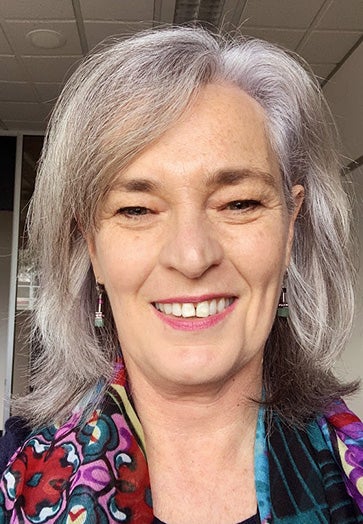
Healthcare projects operate in a uniquely complex environment, requiring specialised skills to navigate governance, safety, stakeholder needs and change in ways that differ from other large industries and organisations. This program arms students with the strategic judgement, critical thinking and deep project expertise to excel in these complex environments.
Anne Hogden
Academic Lead Healthcare Specialisation
Explore related project management programs at UNSW Online
Master's
Graduate Diploma
Graduate Certificate
Explore study areas related to project management
UNSW offers a variety of programs that can help you discover your passion, develop in-demand skills and find the pathway that aligns with your ambitions.

Online Management Programs
Master the skills needed to lead modern business environments and cross-functional teams. Choose the business skills that most align with your industry and goals to drive transformation and sustainable success across any industry.
View programs
Online Financial Technology Programs
Transform how people and organisations manage money, data and digital assets.
View programs
Online Analytics Programs
Bridge the gap between data and decision-making by collaborating with business teams to tackle real-world challenges.
View programsUNSW Online articles